

EU adopts its 16th package of economic and individual measures
On the third anniversary of the beginning of Russia’s full-scale invasion of Ukraine, the Council of the European Union today adopted a wide-ranging 16th package of economic and individual restrictive measures. The package touches on vital sectors of the Russian economy, further weakening the regime’s ability to wage its illegal, unprovoked and unjustified war of aggression against Ukraine.
The Council agreed on a significant set of 83 listings, consisting of 48 persons and 35 entities responsible for actions undermining or threatening the territorial integrity, sovereignty and independence of Ukraine.
In addition, the Council established two new criteria that will allow the EU to impose restrictive measures on individuals and entities that own or operate vessels of Putin’s shadow fleet, and those supporting or benefitting from Russia’s military and industrial complex.
Shadow fleet
Further vessels were added to the list of those subject to a port access ban and ban on provision of a broad range of services related to maritime transport. This measure targets non-EU tankers that are part of Putin’s shadow fleet circumventing the oil price cap mechanism, support the energy sector of Russia, or vessels that are responsible for transporting military equipment for Russia or stolen Ukrainian grain. A total of 74 vessels originating from third countries were targeted today on these grounds, bringing the total of designated vessels to 153.
Finance and banking
For the first time, the EU is imposing a transaction ban on credit or financial institutions established outside Russia that use the ‘System for Transfer of Financial Messages’ (SPFS) of the Central Bank of Russia. SPFS is a specialised financial messaging service developed by the Central Bank of Russia to neutralise the effect of restrictive measures.
The Council decided to extend the prohibition on the provision of specialised financial messaging services to 13 regional banks considered to be important for the Russian financial and banking systems.
Trade
The Council also added 53 new entities to the list of those directly supporting Russia’s military and industrial complex in its war of aggression against Ukraine. They will be subject to tighter export restrictions concerning dual use goods and technologies, and goods and technology which might contribute to the technological enhancement of Russia’s defence and security sector. A third of these entities are Russian while the others are located in third countries (China including Hong Kong, India, Kazakhstan, Singapore, Türkiye, the United Arab Emirates, and Uzbekistan) and have been involved in the circumvention of trade restrictions or have engaged in the procurement of sensitive items needed for instance for UAVs and missiles used for Russian military operations.
Additionally, today’s decision expands the list of restricted items that contribute to the technological enhancement of Russia’s defence and security sector by adding items for the development and production of Russia’s military systems, such as: chemical precursors to Chloropicrin and other riot control agents, software related to computer numerical control (CNC) machines, chromium compounds and controllers used to guide Unmanned Aerial Vehicles (UAVs).
Lastly, the EU introduced further restrictions on exports of goods which contribute to the enhancement of Russian industrial capabilities (chemicals, some plastics and rubber) and their transit through Russia, as well as further restrictions on the import of primary aluminium, which generates significant revenues for Russia.
Broadcasting ban
The Council today decided to suspend the EU broadcasting licences of eight Russian media outlets under the permanent control of the Russian leadership, and to prohibit them from broadcasting their content. These are: EADaily / Eurasia Daily, Fondsk, Lenta, NewsFront, RuBaltic, SouthFront, Strategic Culture Foundation, and Krasnaya Zvezda / Tvzvezda. These media outlets have been essential and instrumental in bringing forward and supporting Russia’s war of aggression against Ukraine, and for the destabilisation of its neighbouring countries and of the EU and its Member States.
Ports and locks
The EU is prohibiting any transaction with certain listed ports, locks and airports in Russia that are used for the transfer of UAVs, missiles and related technology and components to Russia, or for the circumvention of the Oil Price Cap or other restrictive measures by vessels practicing irregular and high-risk shipping practices. This includes access to their facilities and the provision of any services to vessels or aircrafts.
Transports
The Council widened the EU flight ban to listed air carriers operating domestic flights within Russia or exporting aircraft or other aviation goods and technology to Russian air carriers and their controlled entities.
Furthermore, the EU is strengthening the existing prohibition on the transport of goods by road within the territory of the EU, including in transit, by EU operators owned for 25% or more by a Russian natural or legal person. The new provision prohibits any changes to road transport undertakings’ capital structure that would increase the percentage share owned by a Russian natural or legal person over 25%.
Energy
The package imposes further restrictions on exports of goods and technology, in particular software related to oil and gas exploration, in order to further restrict Russia’s exploration and production capacities. Additionally, it extends the prohibition to provide goods, technology and services for the completion of crude oil projects in Russia, such as the Vostok oil one, similarly to the completion of LNG projects currently in place.
The Council is also banning the provision of temporary storage for Russian crude oil and petroleum products within the EU, independently from the purchase price of the oil and the final destination of these products.
Others
The EU is prohibiting the provision of construction services, including civil engineering works, extending the approach already in place in illegally occupied parts of Ukraine.
In order to fight unlawful re-exportation of sanctioned EU goods, EU operators selling sensitive goods to third countries other than partner countries are required to implement due diligence mechanisms, capable of identifying, assessing and mitigating the risks of such re-exportation to Russia. The Commission will assist economic operators to facilitate their compliance, particularly in relation to these requirements.
Belarus
The package includes further restrictive measures on Belarus mirroring the trade-related sanctions agreed against the Russian Federation, and other measures such as restrictions concerning the sale or provision of services and software, deposits and crypto-asset wallets, and transports.
The Council also introduced a new listing criterion targeting persons, entities or bodies supporting or benefiting from the military and industrial complex of Belarus.
Crimea and Sevastopol, and certain non-government controlled areas of Ukraine
The Council introduced new restrictions in Crimea and Sevastopol, and in the non-government controlled areas of Ukraine in the oblasts of Donetsk, Kherson, Luhansk and Zaporizhzhia, with the objective of inhibiting their integration into the Russian Federation, and preventing circumvention of EU sanctions.
These restrictions concern the provision of accounting, auditing, bookkeeping, tax consulting, business and management consulting, public relations, construction, architectural, engineering, legal advisory, IT consultancy, market research and public opinion polling, technical testing and analysis and advertising services. Restrictions concern the provision of certain software for the management of enterprises and for industrial design and manufacture, and related intellectual property rights or trade secrets.
The sanctions regime concerning the non-government controlled areas of Ukraine was recently prolonged for a further year until February 2026.
Find out more
MOST READ





RELATED NEWS
SEE ALSO
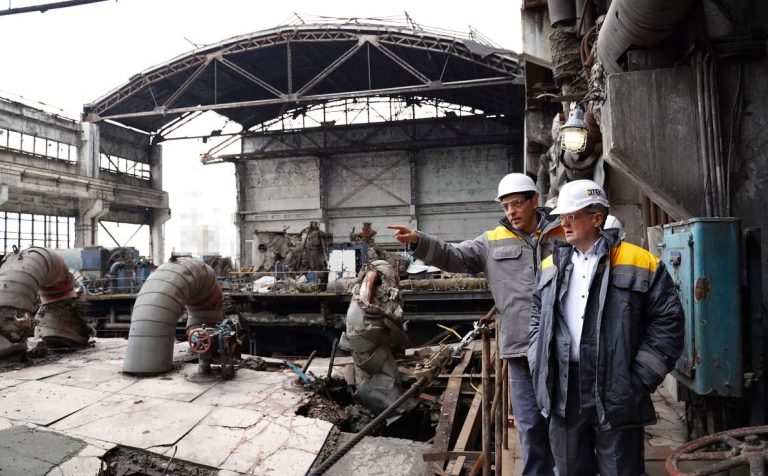
With Sweden’s contribution to the Ukraine Energy Support Fund, total lifetime contributions reach €2 billion
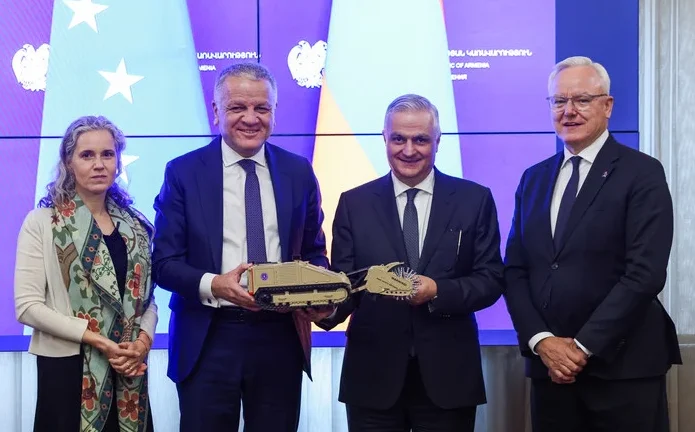
EU donates advanced demining machine to Armenia
European Parliament praises Moldova for reforms despite Moscow interference
Post-war elections in Ukraine: EU and its Member States help Kyiv in preparing for out-of-country voting
Moldova: 383 companies receive EU-backed grants so far this year


The information on this site is subject to a Disclaimer and Protection of personal data. © European Union,
