

EBRD regional report: increases in global energy prices could generate a revenue windfall for Azerbaijan
Azerbaijan’s economy has lost momentum in the past year, with declining hydrocarbon output pushing the economy into contraction in early 2026, according to the latest edition of a flagship economic report by the European Bank for Reconstruction and Development (EBRD), published on 3 June.
Real GDP growth slowed to 1.4 per cent in 2025 and output contracted by 0.3 per cent year-on-year in the first quarter of 2026 as oil and gas sector output fell by 1.2 per cent and non-hydrocarbon growth decelerated to 0.2 per cent.
Inflation averaged 5.7 per cent in the first quarter of 2026, near the upper bound of the central bank’s target range.
The overall fiscal surplus narrowed from 4.1 per cent of GDP in 2024 to an estimated 2.6 per cent in 2025, while public and publicly guaranteed debt remained low, at 28 per cent of GDP at year end.
The current account surplus fell from 6.3 per cent in 2024 to 4.6 per cent of GDP in2025. Against this backdrop, the combined foreign assets of the central bank and the state oil fund (SOFAZ) continued to grow, reaching 112 per cent of GDP in 2025.
Real GDP growth is forecast to pick up to 2.0 per cent in 2026 and 2.5 per cent in 2027 following a weak economic performance at the beginning of 2026. The growth outlook remains sensitive to hydrocarbon prices and production volumes.
Increases in global energy prices triggered by the conflict in the Middle East could generate a revenue windfall for Azerbaijan and support growth-enhancing spending and investment, counteracting negative spillovers from the conflict.
In addition, regional connectivity and trade initiatives enabled by the US-brokered peace framework with Armenia as well as continued large-scale investment in renewables may boost growth and economic diversification in the medium term.
Find out more
MOST READ






SEE ALSO
Ireland pledges support for Ukraine and candidate countries as it assumes Presidency of Council of the EU
EU launches connectivity and communities support programmes for peace in the South Caucasus
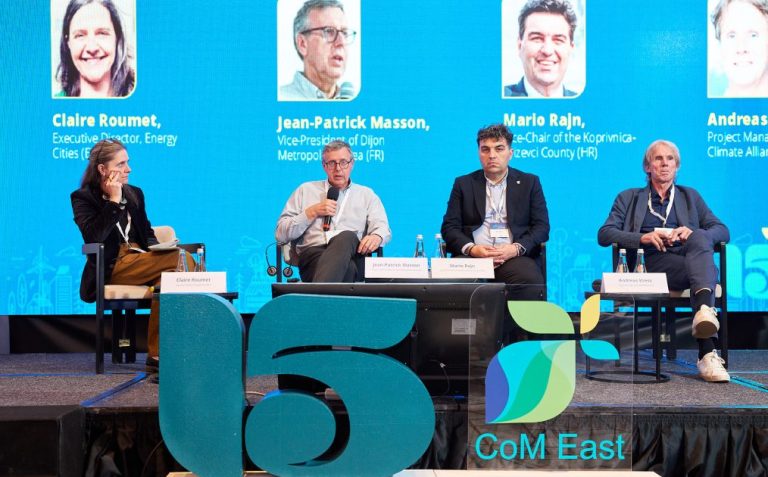
Covenant of Mayors celebrates 15th Anniversary in Eastern Partnership region
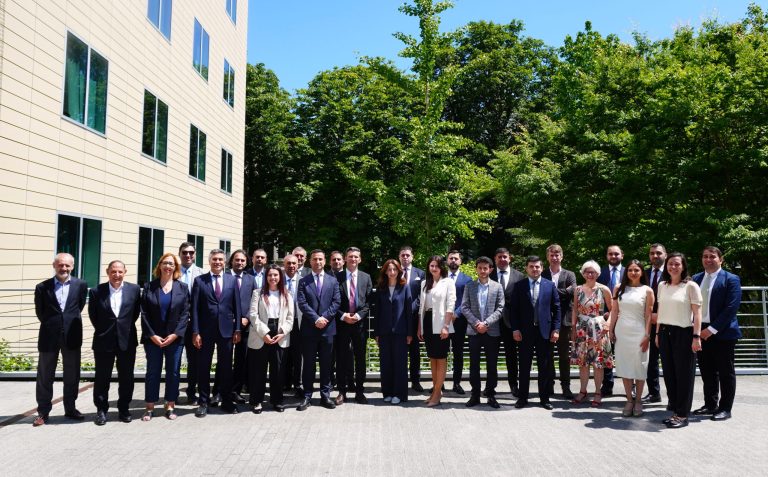
EU Connectivity Agenda: EU4Energy brings together South Caucasus countries and Türkiye for first regional dialogue
New EU sanctions target Russian energy revenues, military-industrial complex, propaganda, and human rights violations


The information on this site is subject to a Disclaimer and Protection of personal data. © European Union,
