
- What is the circular economy?
- Why does it matter?
- How does the EU promote the circular economy?
- How is the EU supporting countries in the Eastern Partnership?
- Can my business really save money from circular economy?
- What can I do as a consumer?
What is the circular economy?
The circular economy is a way of producing and consuming goods, rethinking how we design, make, and use products so that they last longer and waste less.
In practice, it means reducing waste to a minimum. When a product reaches the end of its life, its materials are kept within the economy wherever possible by reusing, repairing, refurbishing and recycling, extending its life cycle, and reusing materials again and again.
The circular economy contrasts with the traditional, linear model of production, which is based on a ‘take-make-consume-throw away’ pattern, and relies on large quantities of cheap, easily accessible raw materials and energy.
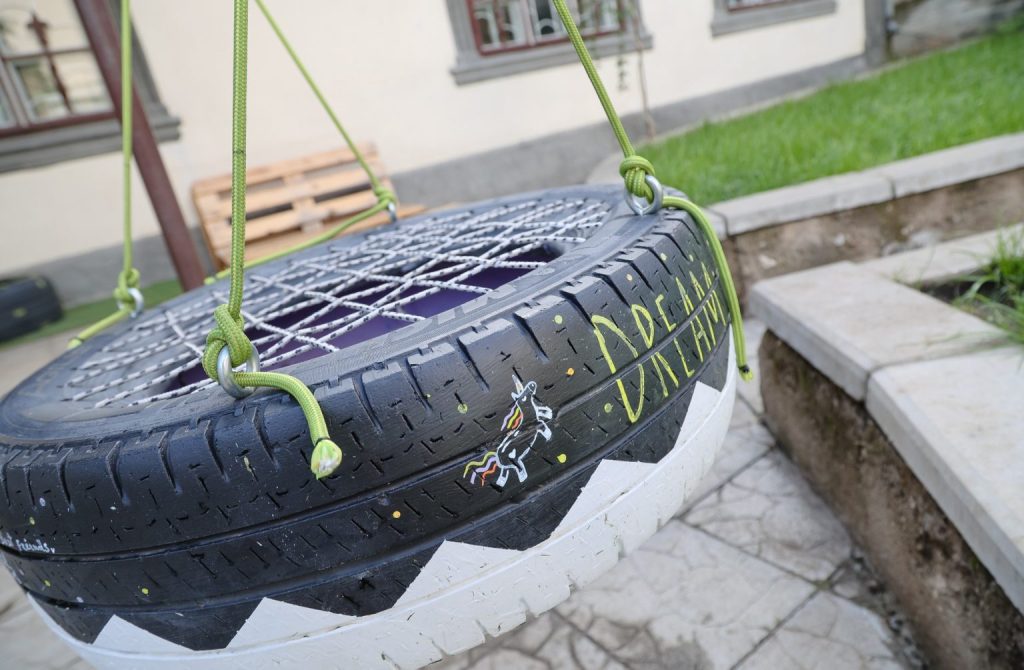
In a world of finite resources, we have to rethink how we produce and consume. This means:
- Phasing-out wasteful items like single-use plastics.
- Designing smarter products that use fewer or recycled materials, and are easier to reuse, repair or recycle.
- Manufacturing in a cleaner, more resource-efficient way.
- Using products for longer or giving them a second life instead of throwing them away.
- Recovering energy from waste as a last step, when nothing else can be reused or recycled.
Why does it matter?
We are currently consuming resources at a rate that is 50% faster than the Earth’s capacity to replace them. Shifting from a linear to a circular economy is critical on a number of levels:
Protecting the environment
Reusing and recycling products slows down the use of natural resources, reduces landscape and habitat disruption and helps to limit the loss of biodiversity. It will also lead to a reduction in greenhouse gas emissions.
Reducing raw material dependence
The world’s population is growing and with it the demand for finite supplies of raw materials. Circular economy mitigates the risks associated with the supply of raw materials, such as price volatility, availability and import dependency.
Creating jobs and saving money
Moving towards a more circular economy could increase competitiveness, stimulate innovation, boost economic growth and create jobs (an estimated 700,000 jobs in the EU alone by 2030).
For businesses, adopting a circular economy model can increase efficiency and create added value when materials are reused several times. This in turn reduces costs, while improved materials, higher rates of technological development, and energy efficiency all offer more profit opportunities.
Consumers will be provided with more durable and innovative products that will save them money in the long term.
How does the EU promote the circular economy?
The European Union has developed one of the world’s most advanced legal frameworks for circularity. These rules cover the entire life cycle of a product, specifically:
- Managing waste better – the EU waste framework directive sets clear priorities: first prevent waste, then reuse, recycle, recover, and only as a last resort, dispose. Producers are responsible for the waste their products generate.
- Turning waste into resources for other industries – with industrial waste mapping leading to industrial symbiosis, one company’s leftovers can become another’s raw material.
- Designing products to last – the EU Ecodesign Framework Directive makes sure products last longer, can be repaired, reused, or recycled, and use fewer resources.
- Helping consumers choose wisely – the EU Ecolabel Regulation provides clear product information (lifespan, repair options, spare parts) to empower people to choose greener products.
- Public authorities leading by example – Green Public Procurement encourages government and public organisations to buy sustainable goods, boosting demand for circular products.
- Fair rules inside and outside the EU – the EU’s 2020 Circular Economy Action Plan ensures imported products follow the same circular standards, while reducing harmful EU waste exports to other countries.
How is the EU supporting countries in the Eastern Partnership?
With EU support, Eastern partner countries are increasingly aligning their policies with the EU’s framework for circular economy. For example:
- Armenia is piloting circular economy approaches with EU support.
- Moldova has integrated circular economy into its Environmental Strategy 2024-2030.
- Ukraine is drafting a National Circular Economy Strategy 2035.
In fact, many small businesses in the region are already applying circular practices – they simply may not label them as such. EU support helps them to gain recognition, scale up, and compete in new markets.
How does it do this? For more than a decade now, the EU has provided consistent support for the circular economy in the region, first through the EaP Green programme (Greening Economies in the Eastern Neighbourhood 2013-17), and most recently through the EU4Environment – Green Economy programme (2019-24), with a series of actions focused on the entire life cycle of a product (design, production, waste). These include:
- Resource efficiency, cleaner production, and industrial waste mapping, which help identify where materials can be reduced or reused across sectors.
- Calculating the environmental footprint of products, ensuring companies understand and reduce the impact of what they produce.
- At the consumer level, eco-labelling provides transparent information about sustainability, while sustainable public procurement guides governments to choose greener goods and services.
- Eco-industrial parks, where companies collaborate to exchange resources and energy, turning one industry’s by-products into another’s input.
- Capacity building and Technology Foresight to streamline concept understanding and create shared vision on the priority actions and value chains.
Going forward, the new EU4Green Recovery East programme (2025-2028) will offer concrete support through digital tools to help businesses identify circular opportunities, demonstration projects that show real-world applications, expanded networks of Resource Efficient and Cleaner Production (RECP) Clubs for peer learning, participatory platforms for circular strategy development through Technology Foresight and alignment with European standards to help local businesses access EU markets.
Can my business really save money from circular economy?
It certainly can! EU-funded actions have been helping businesses across the Eastern Partnership region to adopt the circular economy model in their manufacturing and production, helping them to save money, cut down on energy and resource use, and improve productivity.
Take the example of Ararat-Chansin, a road building company in Armenia, which took part in a Resource Efficient and Cleaner Production (RECP) demonstration project under the EaP GREEN programme. The project recommended a number of options to improve efficiency at the company’s production site, including the replacement of the electric heating system with natural gas, and repair and modernisation of equipment. Four years later, the company had recovered its investment with savings of almost €200,000 per year, including a reduction of 73% in electricity, 42% in natural gas, and 16% in water used in the production of asphalt.
Find out more: Circular Economy and new Growth Opportunities in Armenia; Country profile: Towards a Green Economy in Armenia
In Azerbaijan, a concrete plant, Shamkhal-86, participated in an RECP Demonstration Project under EU4Environment. The project identified three easy solutions to save resources and money: installing filters and cement level censors in the silos (preventing pollution, loss of raw materials, and potential equipment damage), and building warehouses to store sand and gravel, minimising waste from wind and rain. For an investment of just over €5,000, the company can save more than €75,000 a year.
Find out more: Circular Economy and new Growth Opportunities in Azerbaijan; Country profile: Towards a Green Economy in Azerbaijan
Working with EU4Environment, Georgian winemaker Chateau Mukuzani is looking at replacing natural gas with biomass waste for its energy production, saving €350,000 a year while substantially reducing emissions and dealing with its solid waste – all for an initial investment of €114,000.
Find out more: Circular Economy and new Growth Opportunities in Georgia; Country profile: Towards a Green Economy in Georgia
In Moldova, the Bons Offices printing house in Chisinau implemented five energy and resource efficiency options suggested under the EaP GREEN programme. Seven years later, it was saving almost €40,000 per year for an initial investment of just under €30,000 – including a 23% reduction in electricity consumption and a 10% reduction of materials used – as well as boasting an increase in productivity.
Find out more: Circular Economy and new Growth Opportunities in the Republic of Moldova; Country profile: Towards a Green Economy in the Republic of Moldova
Gardens of Karlivshchyna produces juices and jams in the Poltava region of Ukraine. Participating in the RECP Clubs programme under EU4Environment, it is set to reduce annual electricity consumption by 474,000 kWh and emissions by 199 tonnes of CO2-eq per year by installing a photovoltaic solar plant. This will make the company energy-sufficient, allowing it to feed its surplus electricity into the grid for further sale. Annual savings of almost €42,000 will allow the company to recoup its investment in less than four years.
Find out more: Circular Economy and new Growth Opportunities in Ukraine; Country profile: Towards a Green Economy in Ukraine
For upcoming opportunities to support your business, follow the opportunities section of the EU4Green Recovery East website.
You can also find significant resources on how to adapt your business to the circular economy from the EU4Environment programme:
- Introduction to the Green Economy – an e-learning course available in all EaP languages
- Resources on resource efficient and cleaner production
- Resources on green products and public procurement
What can I do as a consumer?
As the end-users in a product’s life cycle, consumers play a crucial role in advancing the circular economy. To become ‘sustainable consumers’, we need to address a number of issues at every stage of the consumer cycle:
- Purchase: Do I need to buy this product (consider leasing, renting, sharing)? If so, can I buy a used product (refurbished or second-hand)? If new, which one should I buy (consider eco-production process, durability, repairability, recyclability)?
- Use: Keep using the product for as long as possible; maintain, clean, upgrade and repair to extend its life.
- End-of-use: If you no longer need a product but it still works, donate, sell or share it; if it no longer works, ensure proper disposal, donation or selling for components, to maximise recycling and reuse.
Here are some more tips to improve your sustainable consumption and prevent waste:
Food: Measure your food waste for one week – it will reveal any bad habits you might have!
Clothes: Look for quality materials. Check the label for fabric composition, country of origin, and stitching. The details say a lot about how long a piece will last.
Repair: Learn how to repair or find someone to do it for you. Mending a small hole or sewing back a button can extend the life of the garment. And if you don’t have time, find a local repair shop or tailor who can do it for you.
Electronics: Think before you buy. Do you really need that new gadget? How often are you going to use it? And if you do buy something – take care of it!
Waste: Make sorting waste easy at home and work. Place the right bins in the right spots with fun reminders (like stickers) for kids or even your in-laws! It’ll help everyone sort waste correctly.
Click here for all these and more tips to help you be a more sustainable consumer.
MOST READ

RELATED PROJECTS


The information on this site is subject to a Disclaimer and Protection of personal data. © European Union,
