

Europe through the streets of Tbilisi
Author: Mariam Gogia/ Editor: Lia Sophie Hamel
“Your mirrors should reflect the city”. And what do the city mirrors, the walls that we pass by on the streets of Tbilisi every day, reflect? The city walls always tell us about the people who live behind these walls, who think behind them, and accordingly, they reflect people’s thoughts and say what they say. Thus, the cold walls of the street become a place of public discourse.
Let us follow the streets of Tbilisi and travel not only through its urban chaos, but also through all its sayings. The streets of Tbilisi and its inhabitants are saying, or rather, they are no longer saying, but instead they are bringing to the public arena – the important message that Georgia is Europe.
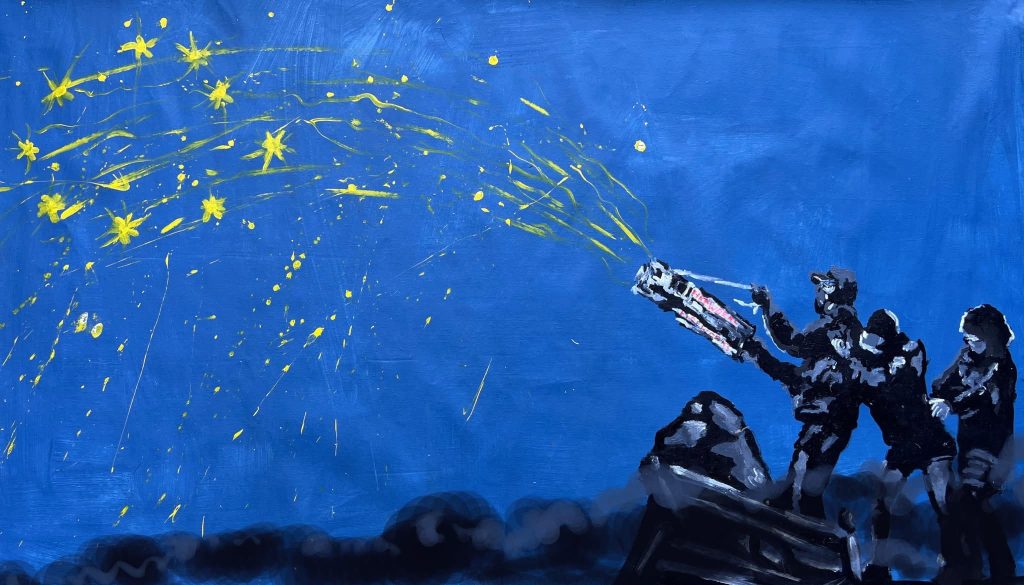
Tbilisi is a city where different eras merge. Here, you can return to the Asian elements of the Middle Ages and find Dumas’ letters later on. On the other side, you will also find close neighbours and their cultural touches, Soviet architecture merges with modern. Tbilisi is a city that lives in the past and in the future at the same time. Its streets are like a journey through time: In one corner there are skyscrapers and in another there are houses carved from antiquity, full of history.
At first glance, it may seem dizzying, but this city contains the history not only of people but also of the past, which painted Tbilisi in different colours. The colours of Georgia are red and white, but thereafter, blue and yellow are the brightest and most noticeable colours in the city. The colours of the European Union are painted next to the Georgian colours on the streets of Tbilisi, and thus, the story of the past turns into a story of the present and the future, where Tbilisi has been walking alongside Europe for a long time. Walking through the city, you will learn not only who we were, and what traces history has left, but also that our path only leads in one direction, to where we belong, and that this direction is Europe. Georgians proudly walk this path, convinced that they are going in the right direction and that at the end of this path, the stars will surely appear, just like on the EU flag.
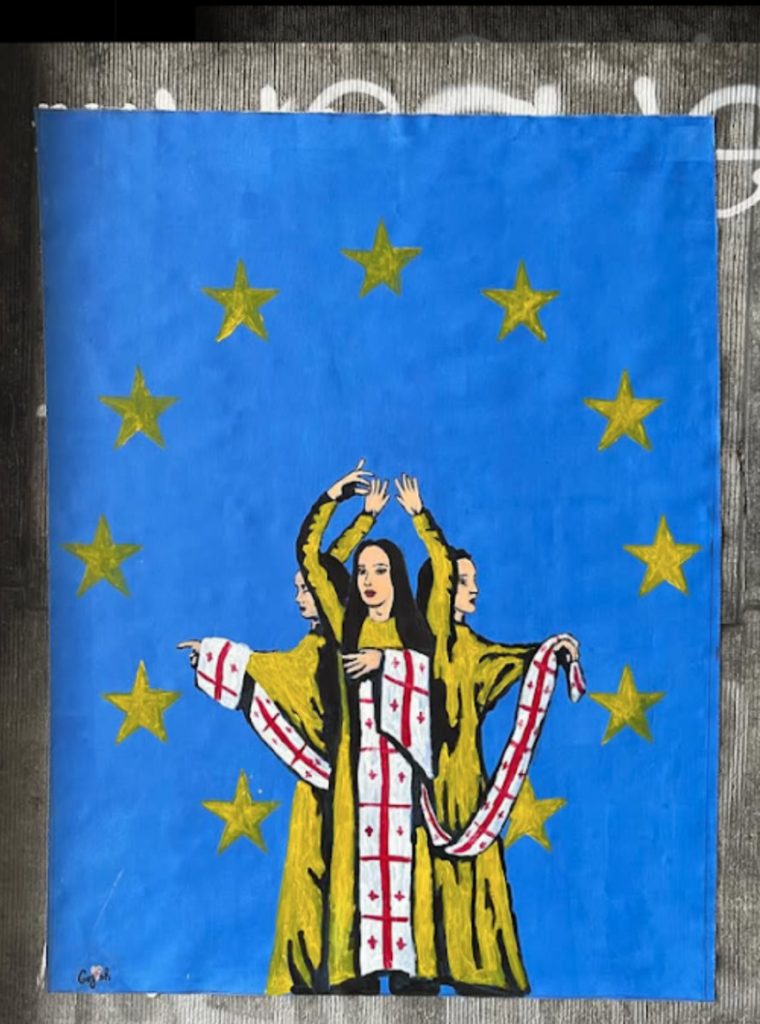
These are the stars that bring a bright future. Perhaps the most European thing about Tbilisi is not its architecture or its cafés but the way in which the city holds the light. This light shines through the young people who are so fearlessly fighting for a European future, as a path and a bridge to each other, perhaps slowly, but most importantly, forward. This city, with its multicultural nature, has always been a bridge between East and West, although today it is becoming more obvious that its youth supports EU values, and that the face of the city is also being renewed with this spirit.
This city holds many echoes, but it is not lost in any of them and always maintains its own spirit. In this way, it is just like the Samaia dance, which is one of Georgia’s national dances, performed only by women, who express their message through each other’s strength, dignity and freedom. The walls of Tbilisi have not missed the reflection of the content and message of this dance. Therefore, on the city’s walls, you will see not only the social pulse of the city but also the traditions that distinguish Georgia.
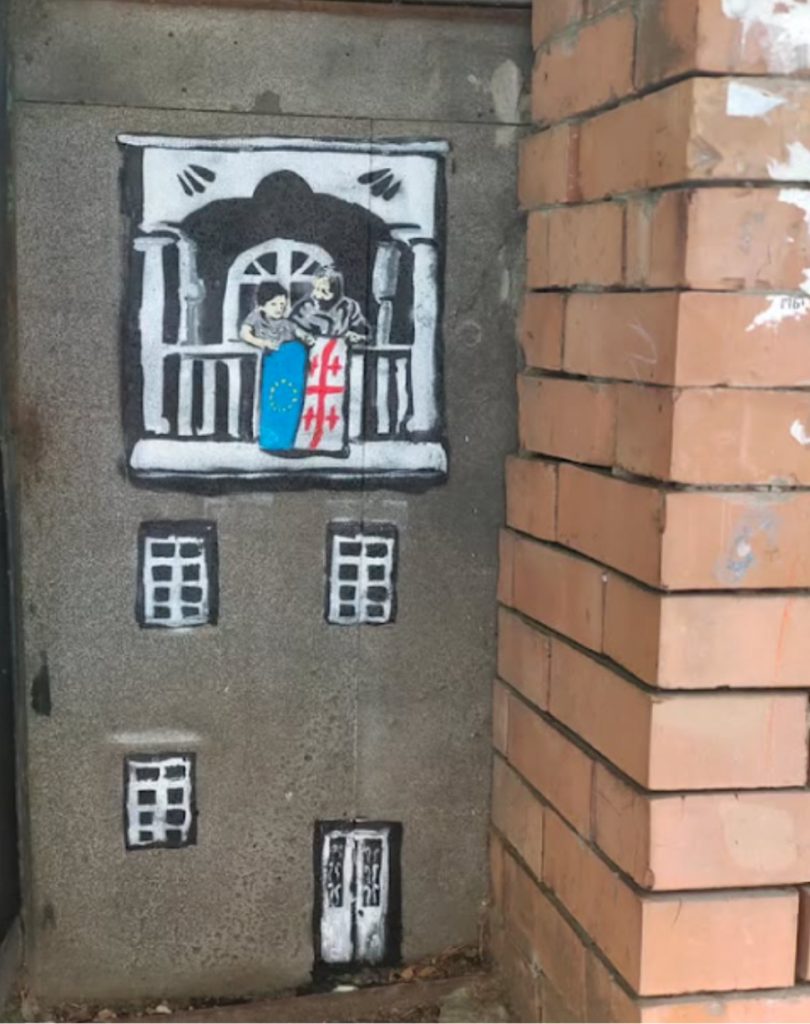
It is impossible to walk through old Tbilisi without noticing how the sun shines brightly into the courtyards of old houses. Here, several generations of neighbours live so harmoniously that it seems like the entire courtyard is just one big family. A big family with a loving grandmother always waiting, looking at her grandchildren with a gaze full of love. And the children are eagerly waiting for new, “old” stories from their grandmothers. Tbilisi’s streets have not failed to reflect this beautiful sight either. This relationship between generations is also expressed by the values of the European Union, unity and freedom, and the aspiration towards Europe.
One of the most famous graffiti in Tbilisi says “Europe, we are coming!”. This is not just a meaningful phrase, but a message expressing hope, struggle and a pro-Western choice.
So, the streets of Tbilisi can tell you a lot. They will tell you about the path they have taken and the path that they will take. One thing is clear, these streets reflect the desire and aspiration of the Georgian people towards Europe, and you will encounter and discover Europe on the many-voiced walls of Tbilisi with every step you take. Tbilisi is not waiting for Europe – it already is Europe with its spirit, the noise of its streets, the language of its graffiti and the ambitions of its new generation. European values are not just slogans here, they are already embodied in the everyday life of the city. This is a city that has long lived in the European spirit and is united in diversity.
Author of the Street Art: Giorgi Gagoshidze (Gagosha)
LATEST
More than just glass: what a futuristic dome in Berlin teaches us about sustainable design
Where culture meets diplomacy: the Armenian alphabet in Strasbourg

From displacement to enterprise: rebuilding my community through entrepreneurship

A message from the YED Coordinators

My personal experience as a Young European Diplomat viewing the EU for the first time


The information on this site is subject to a Disclaimer and Protection of personal data. © European Union,
