

BioNova: turning waste into clean energy in Georgia
When Nikoloz Gongliashvili first realised that over 62% of Georgia’s waste is organic, he saw not a problem, but an opportunity. Growing up in the small town of Kareli, he witnessed at first hand how farmers struggled with high energy costs, fertiliser shortages, and expensive waste management. This observation sparked the creation of BioNova.ge, a youth-led cleantech enterprise with a bold mission: “from waste to energy.”
“What was once considered a burden – organic waste – can become a resource for energy, fertiliser, and climate action,” says Nikoloz.
The idea for BioNova was born during research and interviews conducted with farmers and food businesses, which revealed a real need for solutions in organic waste processing. Many farmers and small enterprises faced high costs for waste management, energy, and fertiliser – challenges that a biogas system could help address.
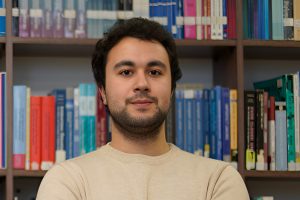
Before receiving support from EU4Youth, BioNova was little more than an idea and a handful of early prototypes. The founders – Nikoloz Gongliashvili (CEO), Nikoloz Chikhladze (CTO), Mariam Beltadze (CFO), and Nini Nikoladze (COO) – faced challenges securing funding, accessing technical expertise, and convincing stakeholders that biogas could be economically viable as well as environmentally beneficial. They needed mentorship, financial resources, and a strong network of partners to turn their concept into a working enterprise.
How EU4Youth helped the idea take off
The team discovered the EU4Youth programme through Junior Achievement Georgia, and immediately recognised that its focus on social entrepreneurship and green innovation matched their vision.
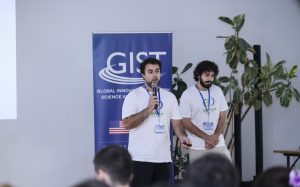
Through the EU-funded EU4Youth Building Back Better Through Social Entrepreneurship project, BioNova received critical financial support for prototype development, alongside mentorship and training in business strategy and technology commercialisation. The programme also opened doors to valuable networking opportunities with partners both in Georgia and internationally.
This combination of guidance and resources allowed the team to refine their biogas prototypes, integrate IoT sensors, and develop a mobile app that provides real-time data on energy and fertiliser production. They also piloted an innovative methane capture system that converts emissions into biogenic CO₂, and engaged directly with farmers and communities through field demonstrations, building trust and demonstrating the tangible benefits of their technology.
Overcoming challenges
Like many young start-ups, BioNova faced several significant hurdles. Limited financial resources slowed early growth, while farmers’ initial scepticism meant the team had to invest considerable time in education and demonstrations to prove the value of their technology. At the same time, sourcing high-quality materials and sensors proved challenging in Georgia, creating additional delays and technical obstacles.
“The main challenge was raising awareness and convincing people that biogas technology is truly beneficial and capable of providing great value,” Nikoloz recalls.
But with persistence and partner support, BioNova overcame these barriers and built resilience – the kind that now defines its culture. Today, the enterprise has completed over 80% of product development and is preparing for market launch.
Impact and recognition
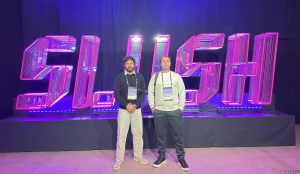
Since its inception, BioNova has achieved significant recognition, earning awards for both innovation and social impact. The team has been named winner of the CUnicorn Batch 3 Pre-Acceleration Programme, received the Social Impact Award 2024, the GITA 25K Shida Kartli Regional Grant, and was honoured as Agropreneur of the Year 2024 at the Future Agro Challenge. BioNova also won the Polish Acceleration Programme (PAR) for agritech innovation, the Kaspi Seeds Grant for Best Social Enterprise, and the European Single Market Expansion Award 2025.
Beyond the accolades, the team has made tangible progress: they have developed six prototypes (two still in pilot phase), produced 60 cubic metres of biogas in initial trials, partnered with over seven organisations, and conducted interviews with more than 120 farmers. They successfully raised 90,000 GEL for research, development, and materials, and built digesters ranging from 0.02 to 15 tons to accommodate a range of agricultural needs.
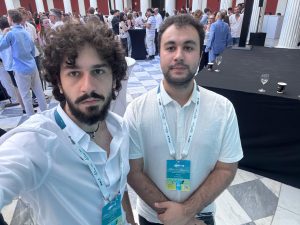
Building Georgia’s green future
BioNova’s long-term goal is to make biogas a driver of regional energy independence and sustainable agriculture in Georgia.
“Each biogas plant is a small but powerful building block of a decentralised energy network,” says Nikoloz. “It can reduce costs, improve energy security, and create new opportunities for local farmers.”
Next steps include standardising their product, securing CE certification for the European market, and expanding regionally across the Caucasus and Central Asia. Partnerships with organisations such as DENA (the German Energy Agency), GITA (Georgia’s Innovation and Technology Agency), and Roots of Impact will strengthen the start-up’s international reach.
Nikoloz and his team believe their journey is just beginning:
“We still have much work ahead, but through collaboration and partnership, we will reach our goals and help to create a more sustainable and greener future in Georgia.”
About the project
The EU4Youth Building Back Better Through Social Entrepreneurship project aims to equip young people in the Republic of Moldova, in Ukraine and in Georgia with the necessary skills and knowledge to set up sustainable social enterprises. In addition, participants strengthen their employability and develop versatile entrepreneurial skills such as creativity, perseverance, teamwork, and resourcefulness.
MOST READ
RELATED PROJECTS
SEE ALSO
‘Europe became real faces and real stories’: Young European Ambassadors look back on ten years of friendships and community projects
Brussels exhibition explores the faces of womanhood in Armenia, Georgia, Moldova, and Ukraine
One conversation can change everything: from Finland to Ukraine, rethinking what young people need – and how to support them
Igrika: reviving Georgian heritage through modern design with EU4Youth support
Bringing life to the village – Sopho’s journey of transforming lives

The information on this site is subject to a Disclaimer and Protection of personal data. © European Union,
