

Ukraine opens new Duplicate Centre to safeguard national plant genetic resources
On 11 November, the Food and Agriculture Organisation of the United Nations (FAO) in Ukraine, with the financial support of the European Union, officially opened the Duplicate Centre for Plant Genetic Resources in Western Ukraine. The new facility handed over to the National Academy of Agrarian Sciences (NAAS) will serve as a long-term storage facility for Ukraine’s unique seed collections, and is located in western Ukraine.
The opening of the Duplicate Centre marks the second phase of the joint EU-FAO project launched in 2022 in response to the destruction of the National Gene Bank in Kharkiv.
Following the emergency evacuation of 51,000 samples of long-term storage to a temporary site in western Ukraine, the new Centre now provides a permanent and secure home for these collections and forms the backbone of the country’s modernised plant genetic resources system. Together with the Yuriev Institute of Plant Production and the Ustymivka Experimental Station, the Centre forms a consolidated national network for conserving over 154,000 samples representing 2,002 unique plant species.
The modular facility includes laboratories, drying, cold and freezing rooms, and office space to support full-scale scientific work. The centre will be equipped with a 100 kW solar power plant, which is scheduled to be launched in late 2025 or early 2026.
The EU-funded project, implemented by FAO, has also led to the adoption of the National Strategy for the Development of the Plant Genetic Resources System of Ukraine (2024–2028) and the introduction of the international information platform GRIN-Global. These will strengthen data exchange, research collaboration, and Ukraine’s integration into global conservation efforts.
“By supporting the establishment of the Duplicate Centre, the EU contributes to safeguarding not only Ukraine’s agricultural heritage but also crop diversity that is vital for global food security,” said Henrik Huitfeldt, Head of Section for Public Finance, Business Support, and Social Policies at the EU Delegation to Ukraine.
Many of the preserved collections – including wheat, triticale, barley, pea, chickpea, temperate forages and sunflower – are of global significance for crop diversity and food security. In line with international best practices, Ukraine is also taking steps to duplicate and safeguard its plant genetic resources in secure international repositories such as the Svalbard Global Seed Vault.
The Duplicate Centre was constructed in partnership with the International Treaty on Plant Genetic Resources for Food and Agriculture, the Global Crop Diversity Trust (Crop Trust), and Nordic Genetic Resource Centre (NordGen).
Find out more
MOST READ


SEE ALSO

Kallas: ‘The more Moscow attacks civilians, the more sanctions must be imposed’
Ireland pledges support for Ukraine and candidate countries as it assumes Presidency of Council of the EU

Blue Haven for Ukraine: peer support training expands across Ukraine’s law enforcement agencies
EU disburses €3.9 billion for drones under the €90 billion Ukraine Support Loan
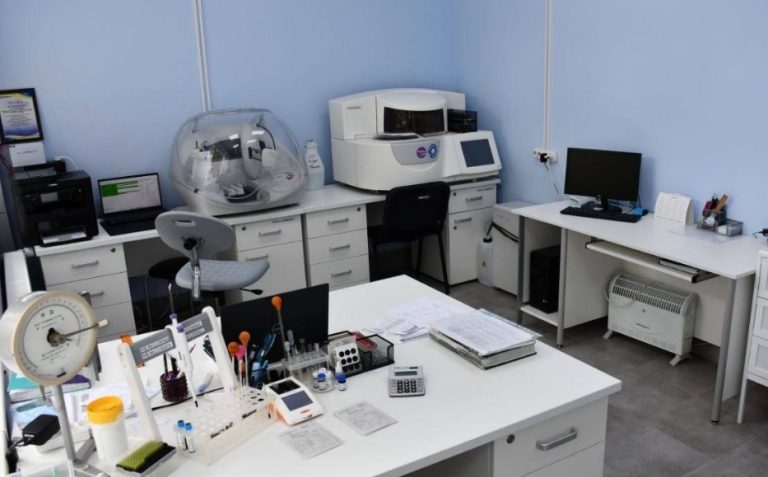
Ukraine: modernised hospital laboratory opens in Makariv with EU support


The information on this site is subject to a Disclaimer and Protection of personal data. © European Union,
