

Public Opinion Barometer: Green transition has public support in Moldova, but depends on infrastructure and costs
Seven out of ten Moldovans are concerned about the state of the environment in the Republic of Moldova. Among the reasons for their concerns are, first and foremost, the impact on health and family, as well as on future generations, followed by the impact on agriculture, natural resources, the frequency of extreme weather events, and rising prices.
These are some of the conclusions of the Public Opinion Barometer on Green Transition, launched on 18 March 2026, on Global Recycling Day. The research was conducted with the support of the European Union and UNDP Moldova.
The Barometer reveals a high potential for social acceptance of eco-friendly behaviours and solutions in the Republic of Moldova. The data shows that simple, low-cost practices that are easy to integrate into daily routines predominate. As a practice requires additional infrastructure, investment, or organisational changes, the frequency of its adoption decreases.
Thus, among the behaviours adopted by 7 out of 10 respondents are walking, the rational use of energy and water, and disposing of waste in designated areas. In contrast, infrastructure-dependent practices are less widespread: plastic recycling (34%), separate waste collection (30%), more frequent use of public transport (31%), and repairing household appliances (27%).
Regarding circular practices, the analysis finds that some solutions are already relatively widespread, but most are still adopted by only a minority of the population. “Household” solutions (especially composting) are easier to adopt, at 50%, while practices that depend on external supply chains (return, energy recovery) remain more limited: recycling (38%), energy recovery (27%), and packaging return (23%). Thus, the authors note that circularity is present but fragmented.
“The study presented today is very valuable because it helps us understand how citizens, businesses, and institutions perceive environmental changes,” said Adam Grodzicki, Deputy Head of Cooperation, European Union Delegation to the Republic of Moldova. “At the same time, it reminds us that the green transition must go hand in hand with investments in infrastructure and practical solutions that make sustainable choices easier.”
The survey was conducted by the CBS-AXA Centre for Sociological and Marketing Research on behalf of UNDP Moldova as part of the project ‘Enabling an Inclusive Green Transition in the Republic of Moldova’, funded by the European Union.
Find out more
MOST READ

SEE ALSO
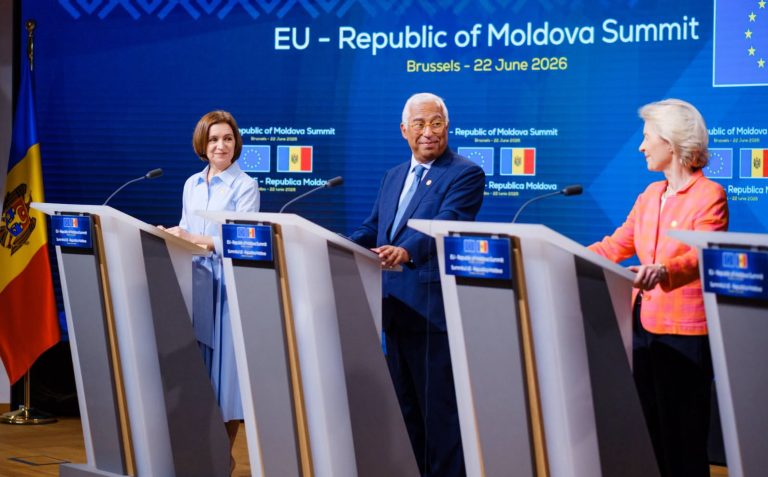
Top EU leaders announce major investments in Moldova at EU-Moldova Summit in Brussels
Moldova: EU-funded programme supports study visits to historical sites for first class of restoration specialists
EIB Global supports modernisation of schools across Moldova
EU expands support for energy-efficient healthcare infrastructure in Moldova
EU-Moldova summit to take place in Brussels on 22 June

The information on this site is subject to a Disclaimer and Protection of personal data. © European Union,
