What is the EU’s new Entry/Exit border system and how will it work?
- What is the EES?
- Where does it apply and to whom?
- How does it work?
- What will happen to the data that is collected?
- Will the EES increase waiting times at the borders?
- What are the advantages of the new system?
- Do I also need to apply for an ETIAS travel authorisation?
What is the EES?
The European Union’s new Entry/Exit System (EES) started to be operational on 12 October 2025. EU countries using the EES are introducing the system gradually at their external borders, until full implementation by 10 April 2026.
The system means that most non-EU citizens will have to register their biometric information at the border. Travellers’ faces will have to be photographed and fingerprints scanned before they are allowed into Europe’s Schengen area. The system will eventually replace passports being stamped by border officials.
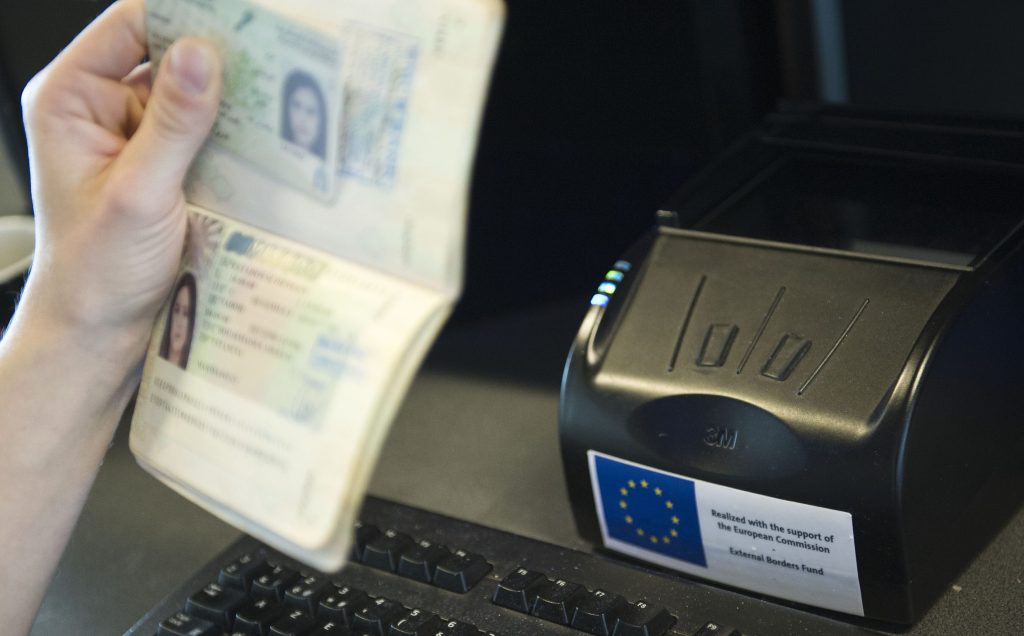
Detailed information about the Entry/Exit System, including FAQ, is available on the EES website.
Where does it apply and to whom?
The EES applies to the Schengen area, which comprises 25 of the 27 EU member states as well as Iceland, Liechtenstein, Norway and Switzerland. The Republic of Ireland and Cyprus are not part of the Schengen area and so will continue to process passports as before.
The EES applies to you if you are a non-EU national travelling for a short stay to a European country using the EES, and you either:
- possess a short-stay visa; or
- do not need a visa to stay for a maximum of 90 days in any 180-day period.
There are some exceptions, such as people who have long-stay visas or residence permits.
How does it work?
When you arrive at the border for the first time after the EES is in place, you will have to provide your personal data. Passport control officers will take a photo of your face and/or scan your fingerprints. This information will be recorded in a digital file.
The process can be quicker if you register some of your data in advance by using a self-service screen, if available at your border crossing point, or using a mobile application, if available from the country of arrival.
Children under 12 will not have their fingerprints scanned.
As the system is being gradually rolled out at the discretion of member states, when you first come into contact with the EES depends on where you are travelling to and when. For example, Germany will phase in the service starting with a small airport in Stuttgart and then build up to operations in Frankfurt, one of the busiest aviation hubs in Europe.
As well as your personal data, your entry and exit dates will be registered electronically in the system. If you overstay the period allowed in the European countries using the EES, the system will identify you and record this information.
In the event that the authorities refuse you entry, the system will also record this information.
What will happen to the data that is collected?
The data provided digitally through the EES will be kept for three years, with some exceptions, after which it is erased.
It can be used by border, visa and immigration authorities in the countries using the system as well as local police and Europol, the EU agency for law enforcement.
If you cross the border again within the three-year period, the process will be quicker as your photograph and fingerprints will already be on file.
If you refuse to provide a picture or have your fingerprints taken you will be refused entry.
Will the EES increase waiting times at the borders?
The gradual roll-out of the EES provides flexibility to Member States to adjust to the new system and minimise queues at the borders. They will also be allowed to suspend EES operations in the event of excessive waiting times.
While travellers arriving at a border crossing for the first time will need to provide personal and biometric data, subsequent crossings will be much quicker as border authorities will simply verify this information, and will no longer stamp passports.
What are the advantages of the new system?
For the European Union, the EES:
- modernises border management by electronically registering non-EU nationals’ entries and exits, or entry refusals;
- makes border checks more efficient, gradually improving the experience for travellers;
- effectively combats identity fraud by collecting biometric data;
- improves security within the EU;
- helps combat terrorism and serious organised crime by acting as an identity verification tool.
For non-EU nationals, the EES:
- provides precise information on the maximum duration of your authorised stays in the European Union;
- replaces the need for passport stamping;
- gradually reduces waiting times in passport control queues by introducing automated border controls.
Do I also need to apply for an ETIAS travel authorisation?
Not yet. The European Travel Information and Authorisation System (ETIAS) is expected to be launched after the EES has been rolled out, in the last quarter of 2026. ETIAS will concern visa-exempt non-EU nationals.
You will need to submit an online application for an ETIAS travel authorisation, providing personal information and details about your trip, and pay a €20 fee. Most applications will be processed within minutes, allowing you to enter the territory of 30 European countries as often as you want for short-term stays (normally for up to 90 days in any 180-day period). The authorisation will last for three years, or until your passport expires.