The Emerald Network: EU support to protect biodiversity in Georgia
- How does the European framework protect species and habitats across the continent?
- How does the EU support Eastern Partnership countries in expanding the Emerald Network?
- Spotlight on Georgia
How does the European framework protect species and habitats across the continent?
Over 40 years ago, the Council of Europe adopted the Convention on the Conservation of European Wildlife and Natural Habitats (1979), or Bern Convention, the first international treaty to protect both species and habitats, and to promote coordinated action on nature conservation.
Today, the Convention brings together 49 countries, including all the European Union (EU) member states and Eastern Partnership (EaP) countries.
Under the Convention, biodiversity-rich areas are designated as Areas of Special Conservation Interest (ASCIs) and integrated into the Emerald Network, which protects vulnerable species and habitats, and extends European nature conservation standards beyond the EU.
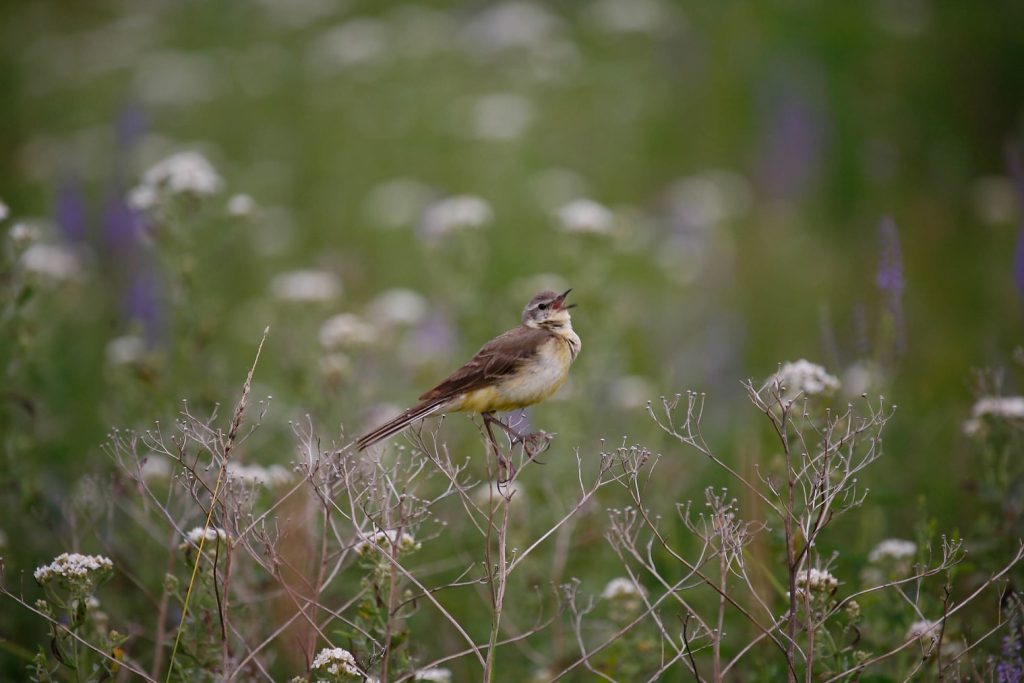
To fulfil its commitments, the EU adopted the Habitats Directive in 1992, and subsequently set up the Natura 2000 network of over 27,000 protected nature sites, covering nearly one-fifth of the continent’s land area. Natura 2000 sites encompass a range of habitat types, such as forests, grasslands and wetlands, as well as coastal and marine environments.
Within the EU, the Habitats Directive and the Birds Directive provide the legal basis for the designation and management of Natura 2000 sites, which represent the EU’s implementation of the Bern Convention objectives and its formal contribution to the pan-European Emerald Network.
How does the EU support Eastern Partnership countries in expanding the Emerald Network?
The EU has supported EaP countries in expanding this network through a combination of financial, technical, and policy support, both historically and through ongoing programmes.
From 2009 to 2011, the EU partnered with the Council of Europe in a Joint Programme that laid the foundation for Emerald Network expansion in the EaP countries. The programme focused on assessing biodiversity, identifying species and habitats of conservation interest, and selecting potential areas for Emerald Network designation. A follow-up Phase II Joint Programme from 2012 to 2016 continued these efforts, helping countries move from site identification toward formal Emerald Network designation and implementation.
Building on the results of this work, the EU now supports the EaP countries, mainly through the EU4Environment programme, to safeguard biodiversity by helping them to manage existing Emerald Network sites and prepare proposals for new sites to join the network. Additional support is available to Moldova and Ukraine as EU candidate countries through the LIFE Programme. Additionally, the APENA project within the EU’s ‘Support to Ukraine in the approximation of the EU environmental acquis’ has developed one management plan for an Emerald Network site, the Pyriatynskyi National Nature Park. The EU also supports regional collaboration and the exchange of data with its member states.
Specifically, EU4Environment helps the countries through:
- Guidance and recommendations for official adoption of Emerald sites.
- Development of management plans for Emerald sites to ensure mutual benefits of nature and the local communities.
- Alignment of national policies with EU standards to ensure a smooth transition from the Emerald Network to Natura 2000, particularly in the EU candidate countries.
- Revision and optimisation of the Emerald database to update and correct data.
- Capacity building for the management of the Emerald Network and implementation of appropriate conservation measures.
- Improvement of scientific knowledge to collect and process data, assess conservation status, and inform conservation strategies.
Spotlight on Georgia
Georgia hosts a wide variety of ecosystems, including forests, which cover 44.5% of the country’s territory, as well as freshwater systems, wetlands, marine and coastal habitats, high mountains, semi-deserts, and steppes.
Georgia ratified the Bern Convention in 2009. Currently, 66 sites in Georgia are fully recognised as part of the Emerald Network, covering 18.5% of the country’s land area, and preserving 215 species of animals and plants and 61 habitats.
Approximately 30% of Georgia’s forests are included in the Emerald Network. The Ajameti site protects the endemic and relict Imeretian oak and Caucasian elm – both on Georgia’s Red List. Other notable species, such as Nordmann fir, Oriental spruce, pistachio, and various juniper species, are found in multiple Emerald sites. Additional protected areas include the Tusheti, Arkhoti, and Kazbegi Emerald sites, where hikers can still encounter the East Caucasian tur, a rare mountain goat, which is an endemic to the Greater Caucasus Mountains.
In Georgia, EU4Environment contributed to strengthening the Emerald Network by developing guidelines for management plans with a focus on forest habitats, providing recommendations for conservation measures, raising public awareness about the value and benefits of nature and biodiversity conservation, and building capacity of national stakeholders.
EU4Environment reports on the Emerald Network in Georgia
Online course on the Emerald Network